

Hail Damage Roof Inspection | How Hail Affects Roofs & Why Damage Isn’t Always Visible
Hail damage can weaken shingles, damage roof accessories, compromise siding, and eventually lead to roof leaks — even when the roof looks fine from the ground. Gold Star Roofing provides photo-documented hail damage roof inspections, storm damage evaluations, roof repair recommendations, roof replacement guidance, and insurance claim support across Austin and Central Texas.

Hail Damage Can Be Serious Even When You Cannot See It
One of the biggest mistakes homeowners make after a hail storm is assuming the roof is fine because there are no missing shingles or active leaks. Hail damage is not always obvious from the ground. In many cases, hail impacts bruise the shingle mat, knock granules loose, damage vents and soft metals, crack exterior materials, or weaken the roof system before a leak ever appears inside the home.
Hail Bruises Shingles
Hail can leave impact marks, granule loss, soft spots, and hidden bruising that weakens the shingle over time.
Damage Is Often Hidden
Many hail impacts cannot be properly identified from the ground. A close roof inspection is needed to document the damage.
Leaks Can Show Up Later
Hail damage may not leak immediately. Water intrusion can appear weeks or months later as damaged materials age and fail.
How Hail Affects Roofing Systems Over Time
What Hail Actually Does to a Roof
When hail hits a roof, the impact can damage more than the surface appearance of the shingle. Asphalt shingles are made with a protective granule surface, asphalt coating, reinforcement mat, sealant strips, and layers designed to shed water. A hard hail impact can displace granules, bruise the asphalt layer, fracture the mat, loosen the seal, or weaken the shingle’s ability to protect the home.
That is why hail damage can be easy to underestimate. A roof may look normal from the driveway, but a trained roof inspection may show bruised shingles, circular impact marks, exposed asphalt, dented vents, damaged pipe jacks, chipped ridge caps, bent gutters, and collateral damage on siding, screens, window wraps, or soft metals.
Common Signs of Hail Damage on a Roof
- Granule loss: exposed dark spots, missing protective granules, or loose granules collecting in gutters.
- Bruised shingles: soft impact areas that may feel different than the surrounding shingle surface.
- Fractured matting: hidden structural damage inside the shingle that can shorten roof life.
- Dented roof vents: visible dents on turtle vents, pipe jacks, metal flashing, and other soft metals.
- Damaged ridge caps: hail impacts on ridge shingles that are often more exposed to direct hits.
- Compromised seal strips: loosened shingles that can become more vulnerable to wind and future leaks.
- Collateral damage: damaged siding, gutters, downspouts, screens, fencing, exterior metals, and window trim.
Why Hail Damage Is Not Always Visible From the Ground
Hail damage is often subtle. Missing shingles are easy to see, but hail bruising is different. Impacts can be small, scattered, hidden by roof slope, or only visible when viewed up close from the correct angle. Some damage is felt as a soft spot before it is obvious visually. Other damage shows up as small areas of granule loss that may blend into the roof until the shingle starts aging faster.
This is why a proper hail damage roof inspection should include photos, close-up documentation, inspection of roof accessories, and a review of collateral damage around the property. The goal is not to scare homeowners — it is to identify whether the roof system was actually compromised by the storm.
What Hail Damage Can Look Like Around the Property
Hail does not only affect shingles. A strong hail storm can impact roofing materials, vents, gutters, siding, window screens, soft metals, and exterior components. Looking at the full property helps determine whether the roof may have been exposed to damaging hail.
Large Hail Can Damage Roofs Fast
Larger hail can impact shingles, vents, gutters, siding, and other exterior materials in a matter of minutes.
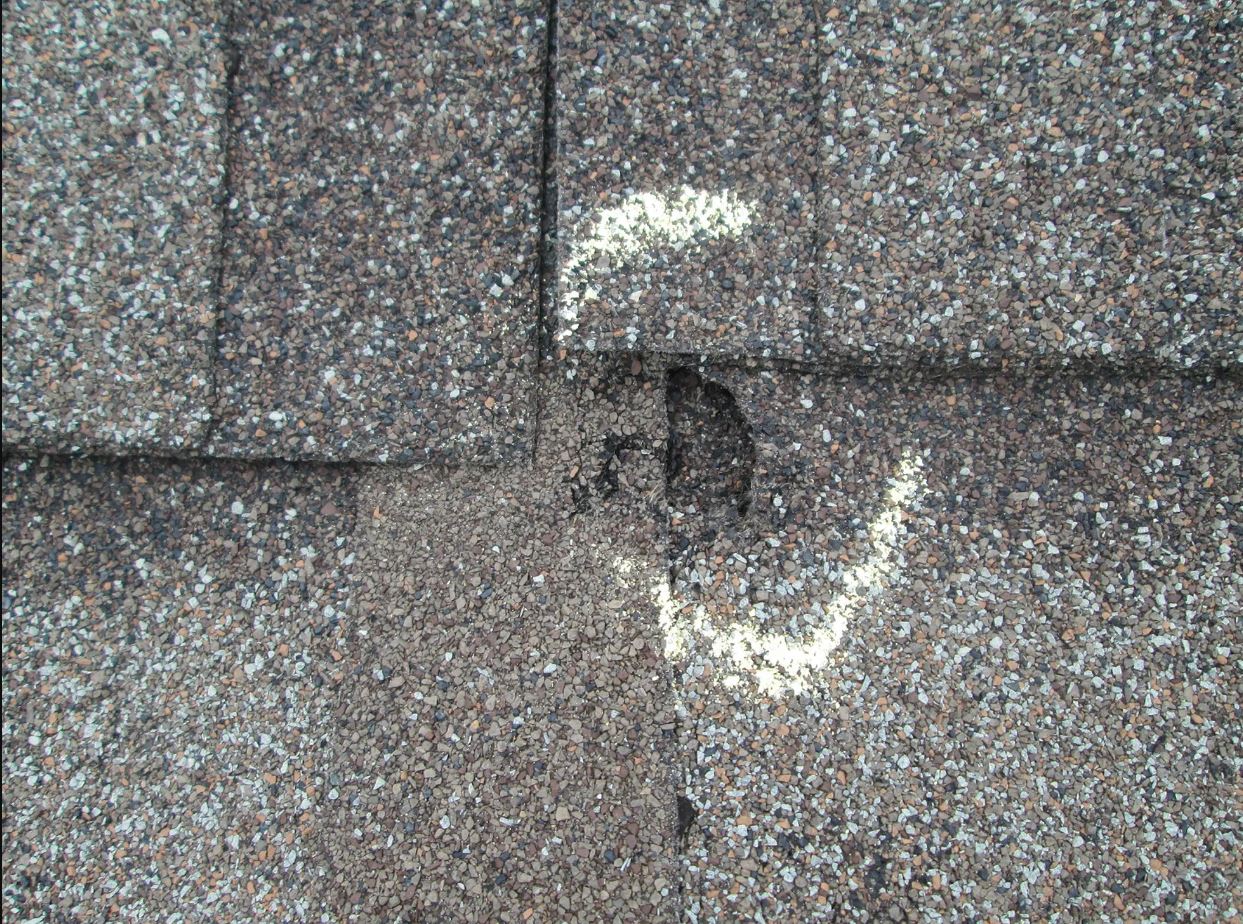
Roof Damage May Need Close Inspection
Hail damage can show up as bruising, granule loss, and damaged roof components that are not obvious from the ground.

Siding Damage Can Confirm Storm Impact
Damaged siding, screens, gutters, and soft metals can help show the severity and direction of a hail storm.

Leaks Can Appear After the Storm
A roof may not leak immediately after hail, but damaged shingles and flashing can eventually allow water intrusion.
Why a Hail Damage Roof Inspection Matters
After a hail storm, a proper inspection can help determine whether the roof is still performing as intended or whether the storm caused functional damage. The inspection should not just look for missing shingles. It should review shingle condition, roof penetrations, ridge caps, vents, flashing, gutters, downspouts, siding, screens, and areas where water could eventually enter the home.
Photo-documented hail damage inspections
Gold Star Roofing provides clear inspection photos and straightforward explanations so homeowners understand what was found. We document roof damage, collateral damage, storm-related issues, and potential repair or replacement options without pressure.
Hail Damage, Roof Replacement & Insurance Claims
When Hail Damage May Lead to Roof Replacement
A roof replacement may be considered when hail damage is widespread, affects multiple slopes, compromises the shingle system, damages roofing accessories, or creates long-term performance concerns. In other cases, isolated roof repairs may be enough. The right answer depends on the roof age, shingle type, storm severity, damage pattern, and overall condition of the roof system.
If insurance is involved, documentation matters. Photos, inspection notes, roof measurements, collateral damage observations, and a clear scope help homeowners understand what happened and what may be needed to restore the roof system properly.
What We Look For During a Hail Inspection
- Hail impact marks on shingles and ridge caps
- Granule loss and exposed asphalt
- Bruising or soft spots in the shingle surface
- Dented roof vents, pipe jacks, flashing, and soft metals
- Damaged gutters, downspouts, window screens, and siding
- Wind-lifted shingles or loosened seal strips
- Active leaks or areas vulnerable to future water intrusion
The goal is simple: determine whether the hail storm caused damage that affects the roof’s ability to protect the home.
Hail Damage Roofing FAQs Homeowners Ask
Can hail damage a roof even if there are no missing shingles?
Yes. Missing shingles are not the only sign of roof damage. Hail can bruise shingles, knock granules loose, damage vents, and weaken the roof system without making the roof look obviously damaged from the ground.
How long does it take for hail damage to cause a roof leak?
Some leaks appear quickly, while others can take weeks or months to show up. Hail damage can weaken shingles and roof components, allowing water intrusion later as materials age, loosen, or fail.
Should I get my roof inspected after a hail storm?
Yes. If hail hit your neighborhood, it is smart to schedule a roof inspection even if you do not see damage from the ground. A professional inspection can identify storm damage early.
Does siding or gutter damage mean my roof may also be damaged?
It can. Collateral damage to siding, gutters, downspouts, screens, fences, and soft metals can indicate the storm was strong enough to damage roofing materials as well.
Can hail damage be repaired, or does the roof need replacement?
It depends on the amount and location of the damage. Isolated damage may be repairable, while widespread hail impacts across multiple slopes may require roof replacement.
Think Your Roof Has Hail Damage?
If your home was hit by hail, do not rely on what you can see from the ground. Gold Star Roofing can inspect your roof, document storm damage, check for collateral damage, and explain your repair or replacement options clearly.